

LATEST IN THE LAW
Los Angeles Emergency Rent Restrictions Extended Through October 30, 2026
October 28, 2026 0 Comment Category: Estate LawLos Angeles property owners and managers have an updated deadline to consider before raising rents or advertising vacant units. According to the Apartment Association of Greater Los Angeles’s (AAGLA) October 7 news alert, the Los Angeles City Council voted on September 30 to extend the wildfire-related emergency rent restrictions through October 30, 2026.
The extension moves the previously reported expiration date of October 9. Housing providers who planned rental changes around that earlier date should review their plans before proceeding.
Which Properties May Be Affected?
The emergency restrictions extend beyond properties covered by the City’s Rent Stabilization Ordinance (RSO). Affected housing may include single-family homes, apartments, condominiums, townhouses, and accessory dwelling units.
These rules also operate alongside other rental housing laws. The general 10% emergency limit does not automatically authorize a 10% rent increase where a stricter rent-control limit applies.
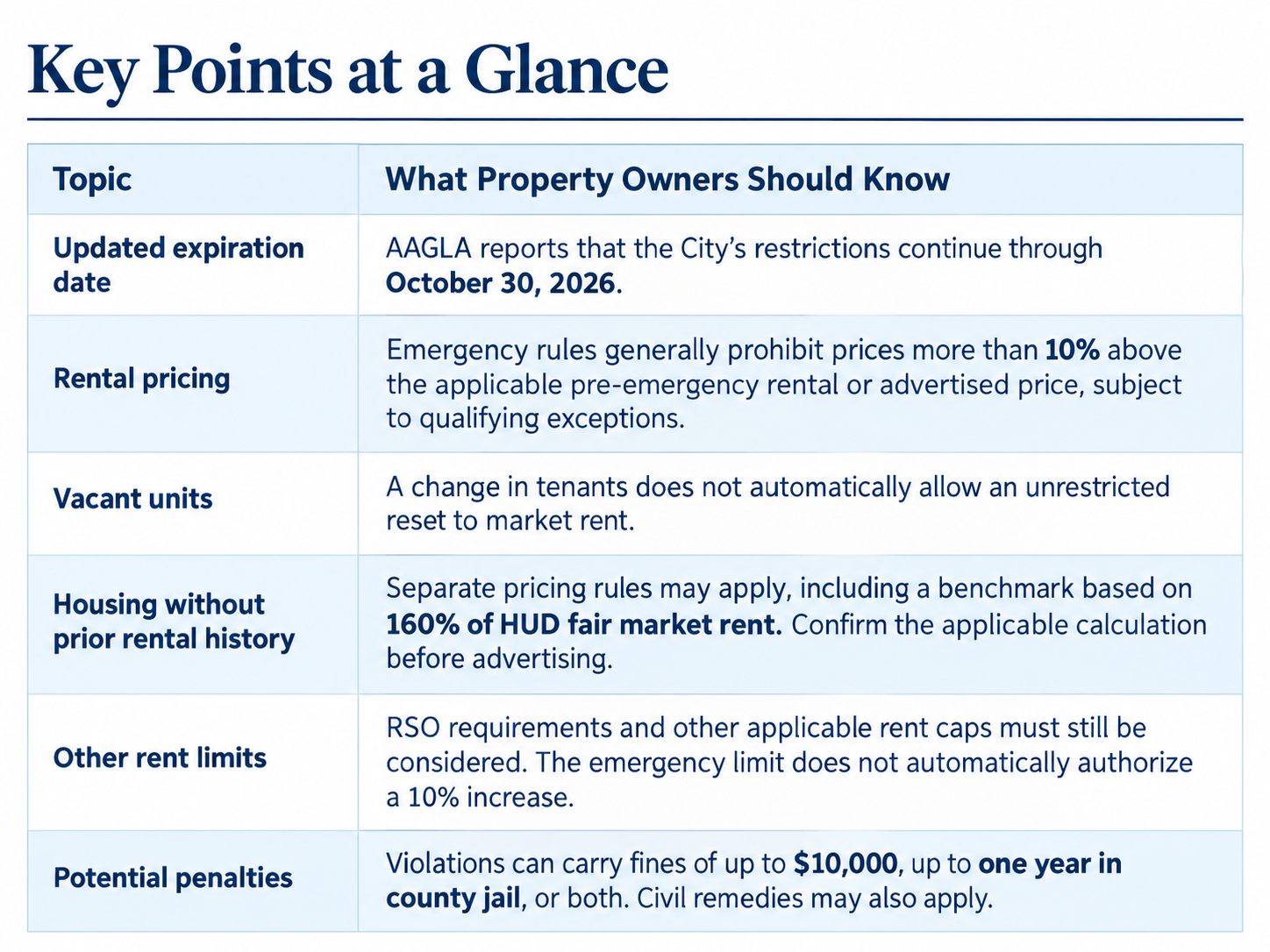
The pricing and penalty summaries above reflect California Attorney General guidance on emergency price-gouging rules.
What Owners Should Know About Rental Pricing
Before setting a new rental price, confirm the property’s rental history, the applicable emergency pricing calculation, and any additional rent restrictions.
Owners who have renovated or furnished a unit should also obtain advice before relying on an exception. Improvements do not automatically establish an exemption; qualifying exceptions depend on statutory requirements and the property’s circumstances.
Review Your Plans Before Moving Forward
If you were preparing to increase rent or list a vacant property after October 9, review those plans against the updated extension before publishing a listing, issuing a rent-increase notice, or entering into a new lease.
Keep supporting records readily available, including:
- Prior leases and rent ledgers
- Previous rental advertisements
- Documentation of improvements
- Records supporting any claimed exception
These materials can help establish the property’s rental history and support a review of proposed pricing.
Another Change to Watch: SB 1365
According to AAGLA’s alert, Governor Newsom signed Senate Bill 1365, concerning price gouging, on September 30, 2026. The alert reports that the legislation will narrow certain existing exemptions beginning January 1, 2027.
Owners considering an exemption should have its availability and timing reviewed before relying on earlier guidance.
Get Guidance From Davidovich Stone Law Group
The extended restrictions may affect rent increases, vacancy listings, and new leases. Reviewing the requirements before taking action can help property owners make informed decisions.
Davidovich Stone Law Group can review your rental history, proposed pricing, lease terms, and potential exceptions to help identify the requirements that apply to your property.
leave A comment